
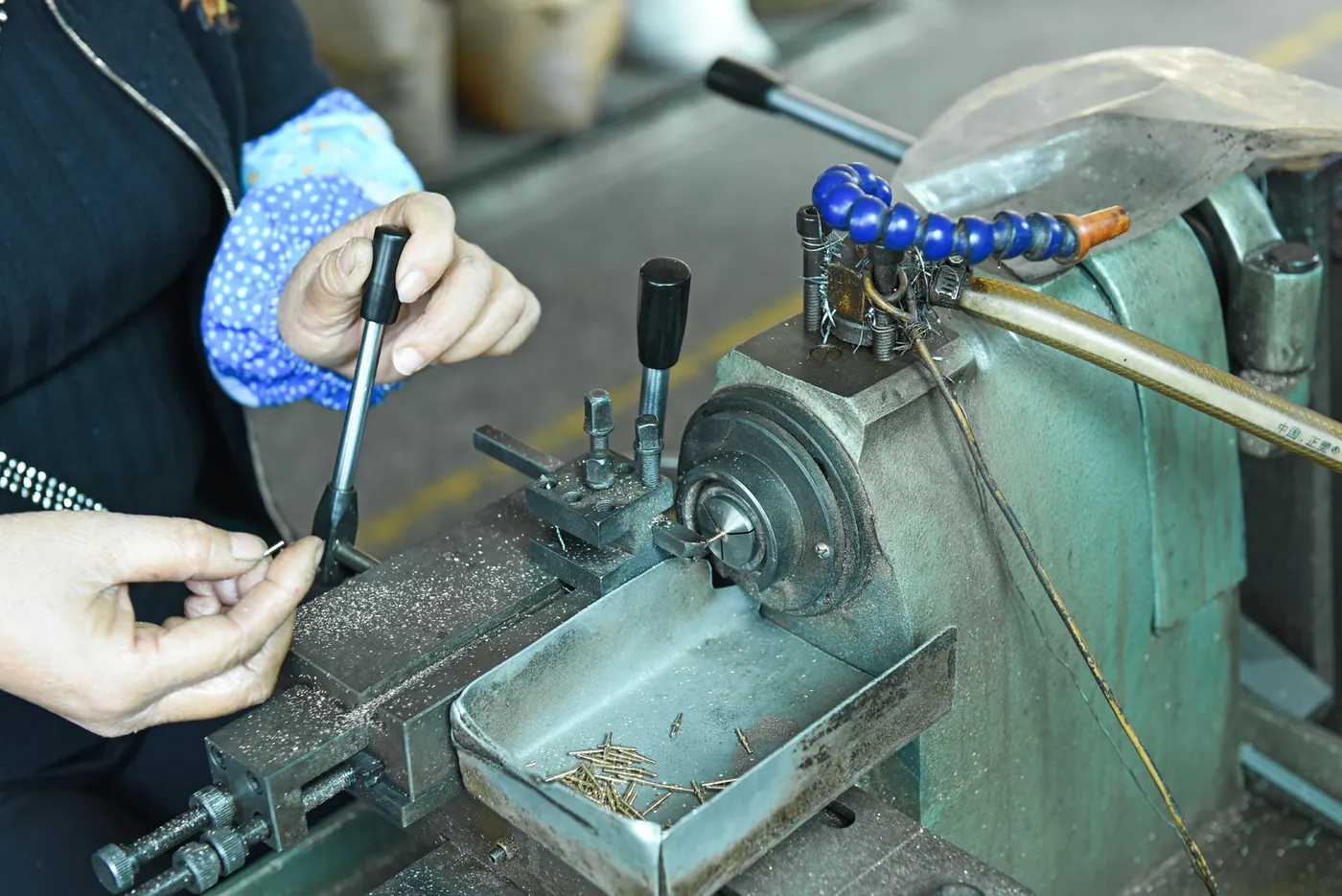
Introducing our turning portfolio
Helida's CNC Turning Parts collection brings together component examples such as prosthetic parts, air valve components and connector fittings. This company portfolio spotlight explains how buyers can use those examples when introducing a new project. The collection illustrates the kinds of components shown in our supplied product materials; it does not define a universal specification for every enquiry.
Turning is commonly associated with features arranged around an axis, including outside diameters, bores and shoulders. Real industrial components often combine those features with threads, grooves, flats or other details. A useful discussion therefore begins with the complete drawing rather than the assumption that a visually similar part must follow an identical production route.
Read the component as part of an assembly
A fitting, shaft-like component or valve part normally interacts with other parts. The important question is not simply whether its outline can be machined. Buyers also need to consider where it locates, how it is retained and which surfaces control its fit or function. Drawings should identify those relationships clearly enough for the manufacturer to review them.
For example, a threaded connection may require information about the thread form and mating component. A locating diameter may have a different purpose from a noncritical outside surface. Sharing that distinction helps focus the technical discussion on functional requirements instead of treating every dimension as equally important.
Materials and finishing need their own instructions
The material callout should be specific enough to distinguish an approved grade from a general family name. If a project permits alternative materials, state that explicitly and ask for a separate review. Material changes can affect more than appearance, so a proposed substitution should not be assumed acceptable because it is easy to source.
Surface finishing also needs clear boundaries. Identify which surfaces receive treatment, which areas require protection and whether the drawing dimensions apply before or after finishing. Buyers who already use a controlled finishing specification should include it with the enquiry. The quotation can then reflect the requested work rather than a guessed interpretation.
Clarify how the part will be accepted
Inspection requirements are most useful when they are established before production. Mark critical dimensions, identify the drawing revision and explain any requested reporting format. Where a gauge, mating part or functional check is important, raise that point during review so its availability and use can be discussed.
A sample can provide useful physical context, especially for an existing component. It should be accompanied by an explanation of which characteristics are approved and which may change. Wear, damage or an unrecorded modification on a sample can otherwise become an avoidable source of misunderstanding. An agreed drawing remains a clearer basis for discussing dimensional requirements.
Use the portfolio to begin a focused enquiry
Visitors can browse the CNC Turning Parts collection and identify the example closest to their application. Include its name in your message if it helps explain the general component family, then attach the actual project drawing. A portfolio reference is helpful background, while the submitted project information defines what needs to be reviewed.
For a quotation discussion, send the material, quantity, finishing requirements, critical features and requested timing through our contact page. Helida will review the project details with you before specifications, inspection requirements and commercial terms are agreed. This approach keeps the conversation centered on your component rather than a generic catalogue description.
Describe a turned component without losing its function
A useful part description connects the component's features to its place in an assembly. Instead of sending only an image and asking for a similar item, explain whether the part locates another component, provides a connection or forms part of a larger mechanism. You do not need to disclose information unrelated to the manufacturing discussion, but the relevant interfaces should be understandable from the documents you provide.
Where confidentiality requirements apply, raise them before sending sensitive files and agree an appropriate way to proceed. Avoid removing so much detail from an initial enquiry that the component can no longer be reviewed meaningfully. The aim is to share the information necessary for a focused technical conversation while following your organization's document and confidentiality requirements.
Give diameter and length requirements context
The overall dimensions of a component describe only part of the specification. A buyer may need particular relationships between a locating diameter, a shoulder and an adjacent feature. These relationships should appear clearly in the drawing and acceptance requirements. Do not expect the manufacturer to infer which dimensions matter most from the order in which they appear or the way the component is photographed.
If your engineering team identifies critical features through a special notation or internal standard, include an explanation where needed. A shared understanding of the notation is more useful than a long list of dimensions without context. If a feature is still under design review, identify it as an open item rather than presenting a provisional value as a released requirement.
Separate new parts from replacement parts
An enquiry for a newly designed component can differ from an enquiry to reproduce an existing part. For a new design, the team may still be resolving material or interface questions. For a replacement component, there may be approved drawings, sample history or established acceptance records. Tell Helida which situation applies and provide the information that defines the intended result.
When an old sample is the main reference, identify any damage, wear or known deviations. A supplier should not have to decide whether a visible feature is part of the design or the result of service. If no approved drawing exists, explain the decision you need help evaluating and clarify how the final component specification will be established before supply is agreed.
Make surface requirements assessable
Words such as smooth, clean or attractive can mean different things to different people. Where surface appearance matters, describe the acceptance basis in a way that can be discussed directly. A drawing note, agreed reference or controlled finishing instruction provides a clearer starting point than a subjective adjective. Keep functional surface requirements distinct from general cosmetic preferences.
If a component has both visible and hidden areas, identify which surfaces require particular attention. Ask whether the proposed finish and the dimensional requirements need further clarification. A finish should not be treated as a purely visual choice if it affects the supply condition described in the drawing. The quotation review is the right time to resolve such questions, before either party relies on an unconfirmed interpretation.
Review quantities as part of the project scope
State whether you need one quantity or several quantity options. A sample request, an evaluation batch and an ongoing production enquiry serve different purchasing decisions. Provide enough context for the manufacturer to understand the stage of the project, while avoiding forecasts that your organization cannot support. The discussion can then distinguish an immediate requirement from a possible later volume.
If the quantity is uncertain, present the options explicitly rather than asking for a general price and later changing the basis of the enquiry. Timing, documentation and packaging should be tied to the option being discussed. This helps the buyer compare like-for-like proposals and reduces the risk that two quotations appear inconsistent simply because they refer to different assumptions.
Ask for a clear response to open requirements
A good technical response should make unresolved questions visible. As a buyer, you can support that process by listing the points that require confirmation and identifying the person who can approve a change. A suggestion about a material, feature or finish remains a proposal until your team accepts it through the appropriate project process.
Record the agreed answer against the current file revision. If the drawing changes after the quotation discussion, send the updated file and explain what has changed. Do not assume that a previous technical discussion automatically applies to a new version. Maintaining that distinction is a practical way to keep a turning project aligned from initial enquiry through the next agreed stage.
Questions buyers often ask about the turning collection
Can a portfolio example be supplied exactly as shown? Treat the example as a starting point and request confirmation against a defined specification. Can another material be considered? Identify the proposed alternative and ask for review rather than assuming substitution. Can a sample establish all dimensions? Explain its status and use a controlled drawing wherever possible. Can a lead time be inferred from another part? Request timing for the actual component, quantity and agreed scope.
About Dongguan Helida Hardware
Dongguan Helida Hardware Co., Ltd. is based in Dalang Town, Dongguan, Guangdong, China. The company's introduction traces the business to 2001. Its website presents CNC turning, CNC milling and CNC turn-mill component examples, supported by company-supplied factory photographs and quality information. The product collections are intended to help visitors identify a relevant starting point for a drawing-based enquiry.
The About Us page includes a factory exterior photograph, a workshop photo carousel, a production line image and views of the reception and team meeting. The Quality and Inspection page presents the supplied ISO 9001:2015 quality management system certificate. These sources provide company context and should be considered alongside the requirements of the actual component being reviewed.
For a project discussion, contact [email protected] or use the Contact Us page. Include the current drawing or sample information, material, finish, quantity and requested timing. Identify any special inspection, documentation or supplier review requirements. Technical details and commercial terms need confirmation for each project; portfolio examples and general website information do not replace an agreed component specification.